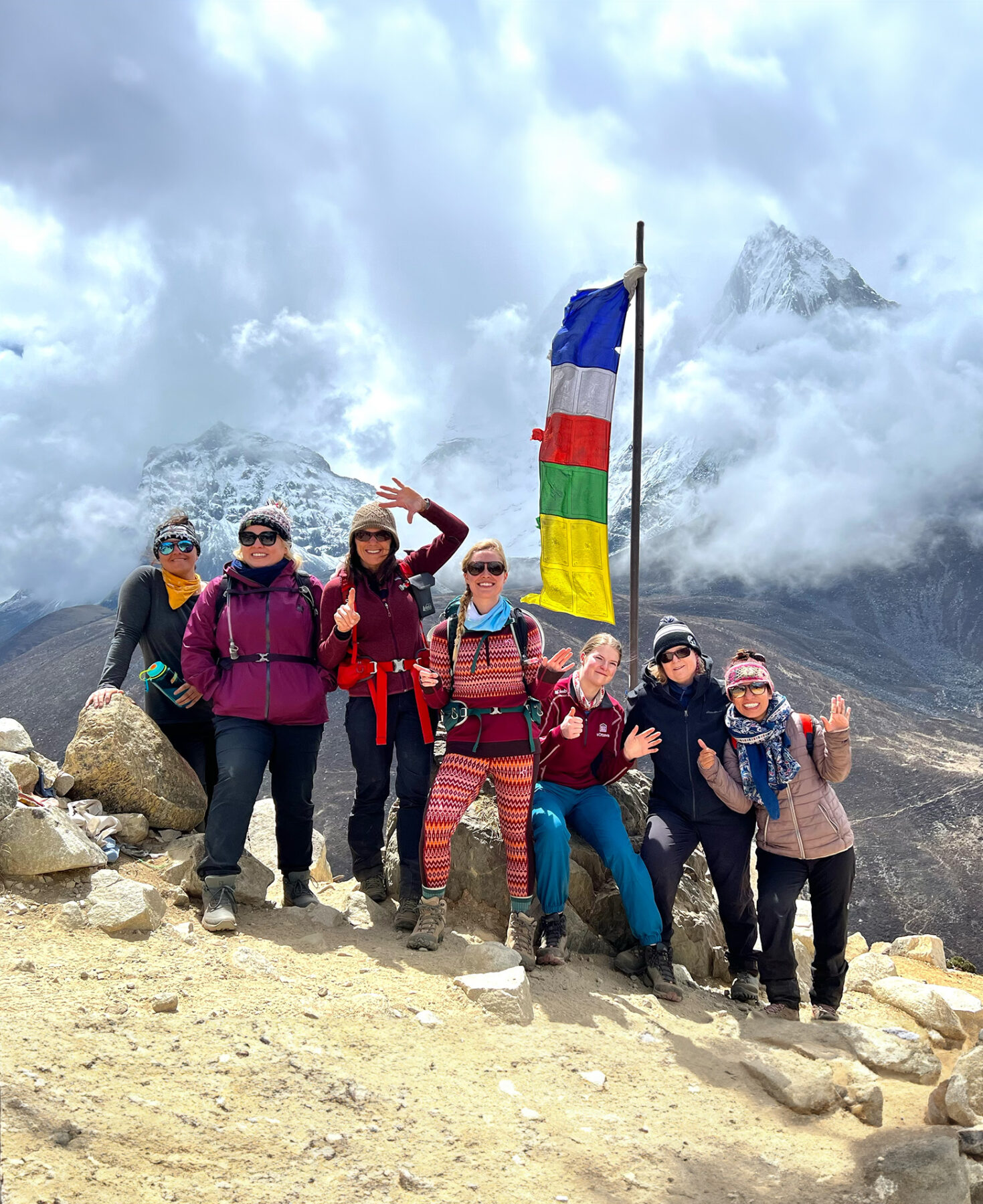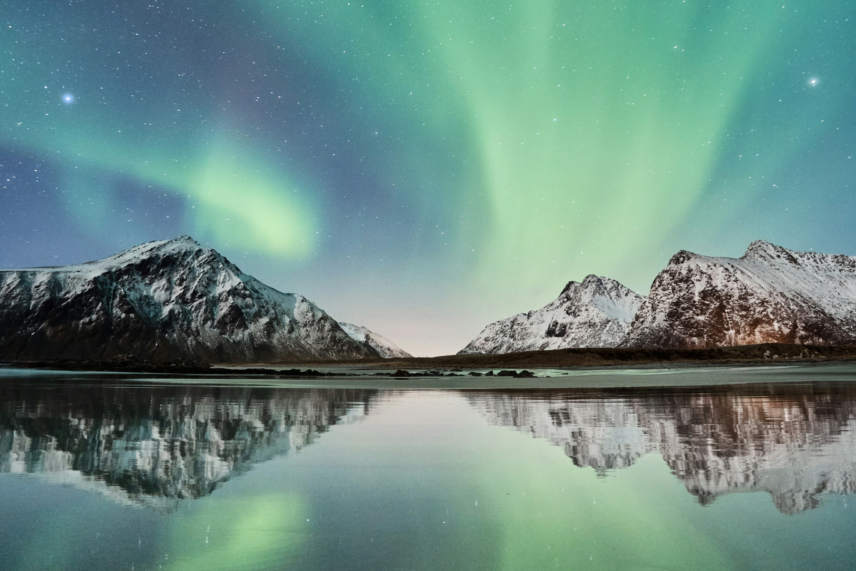
Svalbard does something to you. It might happen the first morning you step out on deck, when the cold wind brushes your face, and the silence is so complete you hear your own heartbeat. It might happen the moment you see your first polar bear, beluga or walrus when everything in you is laser-focused on that single point of otherworldly contact. Or it might come quietly over dinner, when you look around the table at the amazing women you are travelling with who are exploring Svalbard travel and know, without quite being able to name it, that something in you has changed.
I have been going to the Arctic for decades – as a polar explorer, as a citizen scientist, as a guide and translator of extremes and now as a Polar Ambassador for Wild Women Expeditions. I am co-hosting the expedition to Svalbard this June, and I cannot wait. Every time I return to the polar regions, I find myself asking questions – not what to pack, but what to unpack. What assumptions do I carry that will cloud my vision? What noise in my head will drown out the silence that has so much to teach? What stories have I been telling myself about who I am and what I’m capable of – stories that no longer serve me, that I need to set down before this place can show me the kind of leadership to step into?
Before we talk logistics, I want to share five facts about Svalbard- because every great expedition begins with understanding where you are going and why it matters. And it ends, if you let it, with knowing yourself better than you did before.
Don’t just ask what to pack. Ask what you need to unpack – what no longer serves you – before you go.
FACT 1: Svalbard is warming six to seven times faster than the global average.
This is not a statistic to scroll past. Svalbard sits between 74° and 81° North – halfway between the tip of mainland Norway and the North Pole. It has always been extreme. But extreme now means something different. Scientists have confirmed that Svalbard is warming at six to seven times the global average rate, making it one of the fastest-warming places on our entire planet. In February 2025, temperatures at Ny-Ålesund – the world’s northernmost permanent settlement – averaged −3.3°C, compared to a historical average for that time of year of −15°C. In February, it rained. In the high Arctic! This is almost unthinkable, but it’s true, and I have experienced that rain in the winter.
Since 1971, the archipelago has experienced an overall annual temperature rise of 4°C, with winter temperatures rising by nearly 7.3°C over the same period. The summer of 2024 broke records that had only been set the year before. These are not slow-moving trends. They are the landscape shifting beneath our feet in real time.
I think about Kim Holmén, a retired climate scientist who spent much of his career at the Norwegian Polar Institute – the same NPI that partnered with us when we overwintered 19 months at Bamsebu, Svalbard, as part of our climate communication expedition. Kim is a man of deep science and enormous warmth, and he has spent a lifetime trying to translate what the ice is saying into a language the rest of us can hear. What the ice is saying right now is urgent. Going to Svalbard is one way of listening.
FACT 2: More than 60% of Svalbard is covered in glaciers.
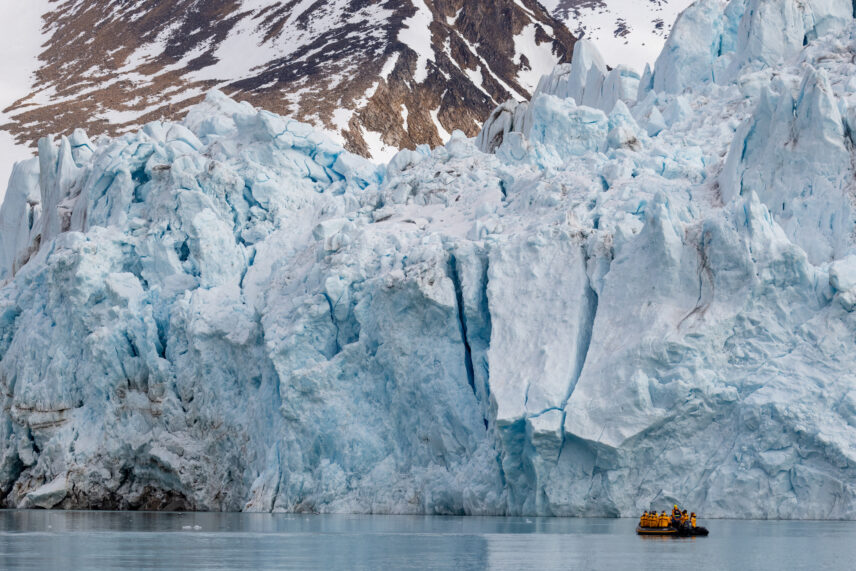
When you explore Svalbard and sail into one of Svalbard’s fjords, and a glacier face stands before you, blue-white and ancient and enormous – you are actually looking at water that fell as snow thousands of years ago. Glacial ice covers roughly 60% of the archipelago, making up about 6% of all glaciated land outside Greenland and Antarctica. They are the frozen memory of the Earth’s climate history. And they are moving.
Svalbard has some of the world’s fastest-moving glaciers. As the landmass warms, meltwater runs beneath the ice and lubricates the bedrock, causing glaciers to surge forward. In July 2024, Svalbard’s ice caps experienced their worst recorded single-day melt – shedding water at a rate five times higher than normal. The images from NASA’s Earth Observatory that summer showed what the data already knew: this is not abstract. This is happening.
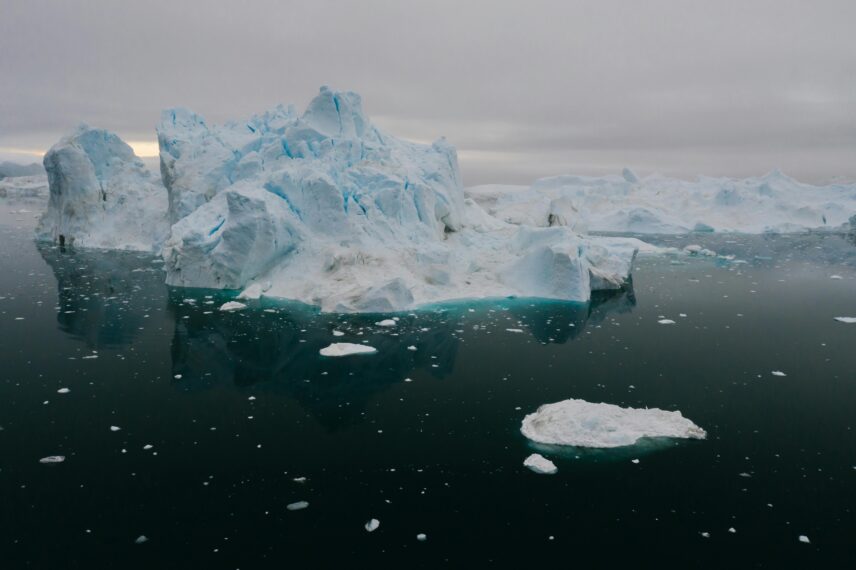
Standing before a calving glacier – watching a piece of ice the size of a building break away and fall into the sea – is one of the most clarifying experiences I know. It asks you directly: what kind of world do you want to help create?
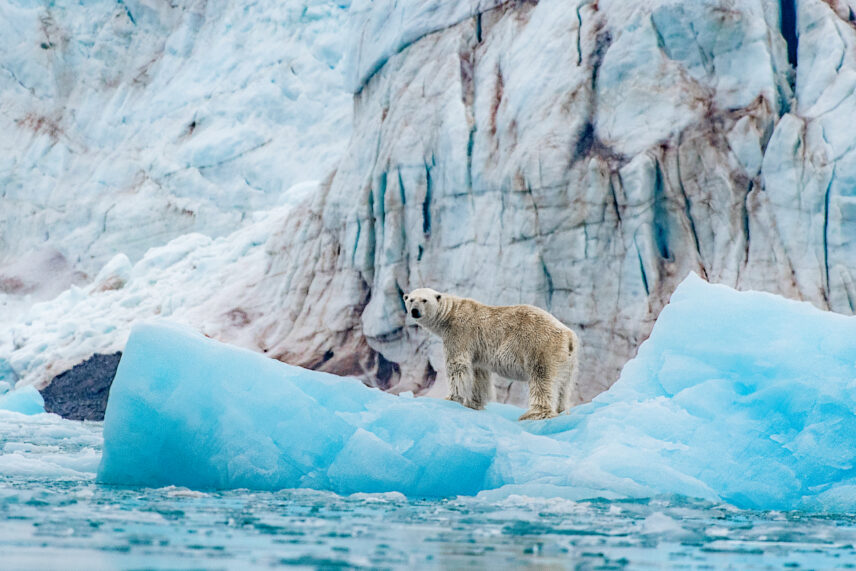
FACT 3: Polar bears are adapting, but adaptation has its limits.
The polar bear is often called a poster species for climate change, and there is a reason for that – their survival is directly tied to sea ice. Without ice, they cannot hunt their primary prey: seals.
Here is what is surprising and instructive about recent science: a major study tracking 770 polar bears around Svalbard over 24 years found that the bears’ body condition actually improved after 2000, even as sea ice declined by more than two months of annual coverage. Researchers believe the bears may be adapting their diet – eating more birds’ eggs, spending more time on land, following the ice north. It is a remarkable story of resilience. I have even seen them hunt and kill reindeer.
But resilience is not invincibility. The same scientists caution that cub survival is declining in low-ice years, and that at some point the bears will reach a tipping point that adaptation cannot bridge. New regulations in Svalbard now require people to keep at least 300 meters from a polar bear year-round – a rule that reflects how seriously Norway takes the protection of its roughly 3,000 resident bears.
I know this intimately. During our 19 months at Bamsebu, the Norwegian Polar Institute tracked a female polar bear who wandered into our small patch of the world again and again. They gave her the identification number N26131. We called her Violet. Following her over those months and watching her move through a landscape that we knew was changing around her was one of the most profound experiences of my life. There is now a 12-minute documentary short about her story called “Violet-a Polar Bear Story”. I recommend it.
Violet didn’t know she was teaching us something. But she was, and she still is. She is my Arctic bear, and I care deeply about her.
FACT 4: A brand-new walrus haul-out was just discovered via satellite in 2025.
We think we know the Arctic. We don’t. In late 2025, scientists using satellite imagery as part of the Walrus from Space project – a collaboration between WWF and the British Antarctic Survey – discovered a previously unknown walrus haul-out on a stretch of Svalbard shoreline. The project has enlisted around 40,000 citizen scientists since 2021, asking the public to search satellite images for these enormous, tusked animals and help build a global census.
Walruses can weigh almost two tonnes, and they are what scientists call a keystone species – one that shapes the entire ecosystem around it. As sea ice melts, walruses are being forced to haul out on land in larger numbers, sometimes fatally stampeding when disturbed. The fact that we are still discovering new gathering sites tells us two things: the Arctic is more dynamic and less fully known than we imagine, and citizen science – ordinary people like all of us paying close attention – genuinely matters.
This is something I believe deeply. Our 19-month expedition ( 2019-2021) was built on the idea that the gap between scientific knowledge and public understanding is one of the most dangerous gaps of our time. Closing it requires people who are willing to go to the places where the changes are happening, pay attention, and bring what they learn back home.
FACT 5: Svalbard’s last Norwegian coal mine closed in 2025 – and what comes next is being written right now.
On June 30, 2025, Gruve (Mine) 7 – the last Norwegian coal mine in Svalbard – closed its doors. It is the end of a chapter that began with hunters and whalers in the 17th century and ran through a century of industrial extraction. What Svalbard becomes next is an open question, and it is one that every visitor to these islands is part of answering.
Norway has made significant commitments to protecting Svalbard. Seven national parks and 23 nature reserves now cover two-thirds of the archipelago. New tourism regulations cap ships at 200 passengers to protect fragile ecosystems. The archipelago is, by many measures, one of the best-managed wilderness environments in the world. And yet the climate does not care about management zones. The changes come anyway.
My friend and fellow leadership thinker Fabian Dattner, who founded Homeward Bound – the largest leadership program ever created for women in science – put it this way after her own expedition to the ice: “It is not just about how we affect Antarctica. It is how Antarctica is affecting us.” I would say the same of Svalbard. The ice is not a backdrop. It is a mirror. And right now, it is asking us what kind of leaders we intend to be.
“Face the facts, own the solutions, small or large, and be part of creating the future we want — not the future we fear.”
~ Fabian Dattner, Homeward Bound
What to Unpack: The Real Packing List
Fabian speaks about leadership as a practice, not a title. She writes that the leaders who will navigate our current moment are those who “know themselves… are open to feedback, learn and grow, adapt and respond.” That is a description of what Svalbard asks of every woman who goes there.
Before you think about base layers and hiking boots (though those matter too), I want to invite you to sit with a different kind of preparation. Instead of a packing list, start with an unpacking list. Ask yourself:
- How do I want to feel at the end of this expedition?
- What story about myself am I ready to leave behind?
- What does it mean for me to pay attention – really pay attention – to a place?
- What will I do with what I learn?
Transformational leadership – the kind the world needs right now – begins with this: not a position, not a platform, but a willingness to be changed by what you encounter. The Arctic is very good at that. It does not let you stay the same.
The most significant thing you can pack, then, is an intention. Not an expectation of what the trip will look like, but a genuine curiosity about who you will be on the other side of it.
Svalbard Travel: Come and See for Yourself
Wild Women Expeditions has been focusing on Svalbard travel adventures and is heading there in 2026 and 2027. These trips are exceptionally special, expert-guided, and designed for women who want more than a beautiful destination – they want an experience that means something. ( right now, Svalbard 2027 is 18% off until June 30th, 2026)
You will sail through fjords that have been glaciated for millennia. You might encounter a polar bear on a distant ridge. You will almost certainly see light that rearranges something inside you. And if you come with the right intention, you will go home knowing something about yourself and about this extraordinary, urgent, irreplaceable planet that you did not know before.
The ice is changing. The question Svalbard is asking all of us is not whether we feel sad about that. The question is what we are willing to do about it.
I hope you’ll come and find out.