I have always believed that the wild places on Earth are our greatest teachers.
They strip away noise, deepen our attention, and remind us who we are when everything unnecessary falls away. There is nowhere on Earth quite like Antarctica. A continent shaped by ice, ruled by weather, and filled with silence so deep it feels initially a bit uncomfortable. Every time I return, I’m reminded that this is not just another destination — it is a threshold. A place that changes the way we see the planet, and ourselves.
For more than three decades, the polar regions have been that place of discovery for me — the Arctic with its human heartbeat of community and culture, and Antarctica with its vast, otherworldly silence. These two ends of the Earth couldn’t be more different, and yet they are bound together as the planet’s great regulators: shaping climate, driving currents, stabilizing weather, and reflecting sunlight back to space. They are also changing faster than almost anywhere else on the planet.
What are the Polar Regions telling us?
Scientists often call the Arctic and Antarctica our early warning systems, but for me, they are also mirrors. The Arctic is warming several times faster than the global average. That acceleration triggers a cascade of impacts: Declining sea ice, thawing permafrost, releasing methane, shifts in wildlife migration, coastal erosion reshaping communities, changes in ocean currents, and polar bears are spending more time on land.
Antarctica, meanwhile, is undergoing rapid ice loss — especially in West Antarctica — contributing directly to global sea-level rise. Its ice shelves act as natural “doorstops” holding back glaciers; when they thin or collapse, ice flow into the ocean accelerates. Antarctica reminds us, day after day, how deeply our oceans and climate are interconnected. A large portion- approximately 70% of the planet’s freshwater is stored in its ice. When that ice melts, sea levels rise everywhere — far from where the ice actually breaks away.
We can read about these changes in reports. We can scroll past them in headlines. We can see the images on a screen. But it is something else entirely to be in these places and feel the change — to feel the air, see the light, be part of the light, watch a glacier calve, see a colony of penguins navigating life, or catch a glimpse of a Polar Bear in its world.
Travel — when done consciously and humbly — becomes a bridge between information and meaning. Being in these places offers something data alone cannot: a visceral understanding of our interconnectedness, not our separateness.
The Moment Everything Changed for Me
People often ask what keeps pulling me back to the poles. It’s surprisingly simple: Every time I return, I come home changed. My perspective shifts. It all started in 1992 when I was 30 years old….just a few seasons ago 🙂
The interior of Antarctica tolerates no mediocrity; I learned this in real time. It has a way of magnifying everything: your fear, your grit, the stories you tell yourself, and the truth beneath them. I first went there on skis, dragging a sled, learning how wind can erase a horizon and how silence can settle into your bones. Later, I returned as a teacher — and as a question — to see what the continent still had to show me. Because the most unforgiving landscapes aren’t always out there. Sometimes they open inside us. A divorce, an illness, a job loss, a border closed, a world made unrecognizable overnight — these are our modern whiteouts.

These polar regions aren’t just landscapes, they’re teachers. And once you’ve learned from them, you never see the world in the same way again.
The People Who Choose to Work at the Ends of the Earth
To work in the Arctic or Antarctica is not simply a job — it is a calling. Polar guides, naturalists, geologists, historians, photographers, Citizen science guides, glaciologists, ornithologists, marine biologists, Zodiac drivers, safety officers, captains, and expedition leaders are the best of the best in their fields. These are people who have dedicated years — sometimes decades — to studying ice, wildlife, the impact of travel, weather, oceans, and remote navigation.
To be hired to work in the Polar Regions is, for many of them, the pinnacle of their careers. A dream achieved. And you feel that the moment you step onboard an expedition cruise ship. Their passion is contagious.
Their depth of knowledge is humbling, insightful, and inviting. Their excitement — even after countless seasons — is as fierce as if it were their first. This is an industry where friendships run deep and camaraderie knows no borders. I know this because I’ve been one of them, part of that group of people who chase cold horizons and dedicate their lives to sharing the wonder of these extraordinary places.
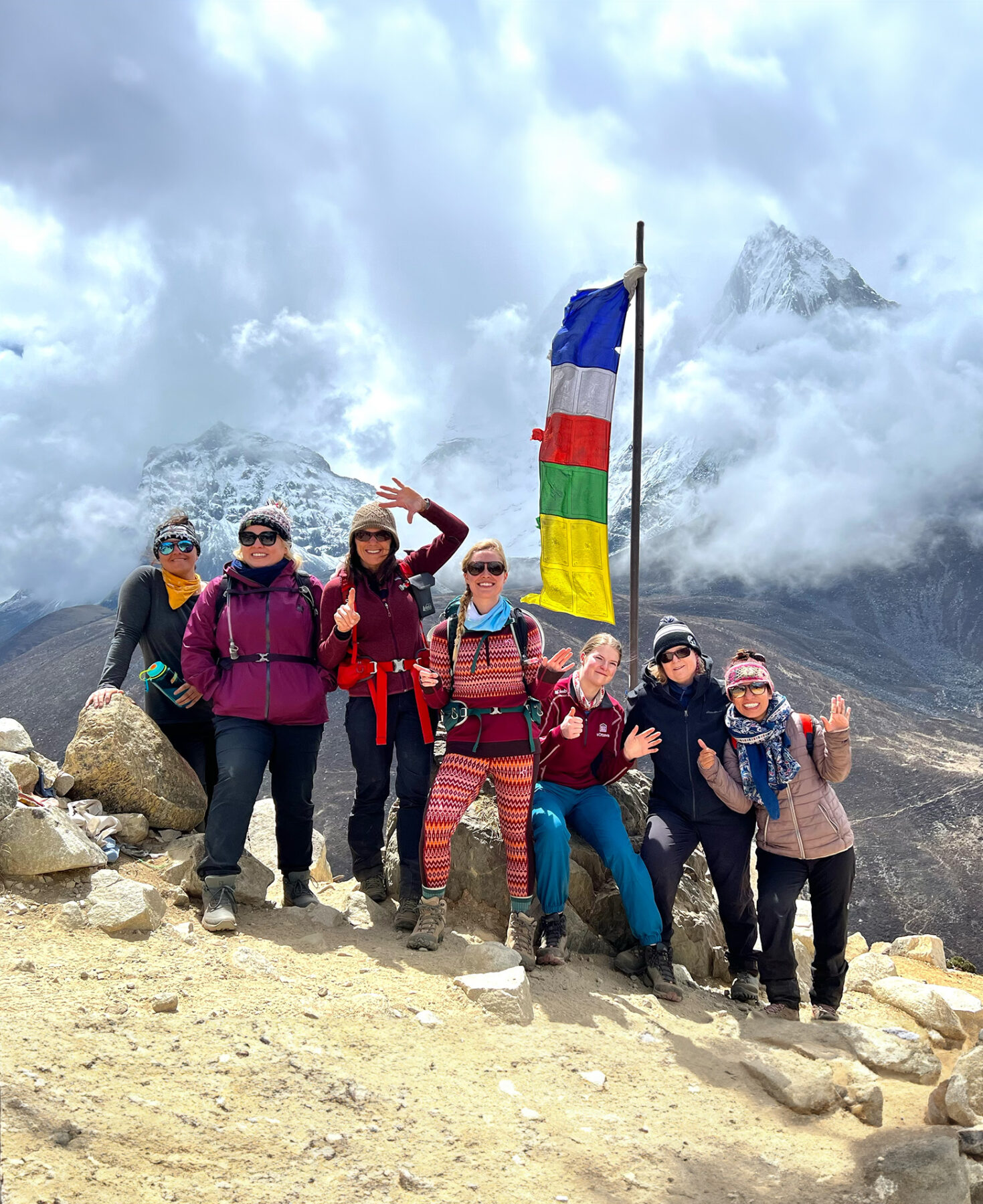
One of the reasons I’m so proud to be the Polar Ambassador for Wild Women Expeditions is that WWE is working to change who gets to be part of the story.
Careers in polar science and fieldwork have long been male-dominated due to systemic barriers, not ability. That is changing, steadily and meaningfully. WWE is championing more women expedition leaders, naturalists, scientists, and guides on ships in both the Arctic and Antarctica. When women lead at the ends of the Earth, the experience changes not by sidelining anyone, but by widening the circle. They create space, visibility, and opportunity. There is a sense of community that is hard to describe until you’ve felt it on the deck of a small ship surrounded by ice or under the midnight sun.
We go to Antarctica because it’s beautiful. Because it’s fragile. Because it’s scientifically essential to understanding our changing planet.
But we also go for something more personal: To be guided — literally and metaphorically — by people who love this world fiercely. People who remind us to pay attention. Who help us stretch, feel, wonder, question, and grow. Who create space for awe and silence and laughter — all in one day. An experience like that stays with you forever.
As I prepare to host future Wild Women voyages, I think often of how lucky we are — not only to stand on the last great wilderness, but to do so in the company of the people who know it best. If the poles are our planet’s great teachers, then the guides are the ones who help us understand the lesson.
An Invitation
If you feel a tug toward these places — a curiosity, a longing, or even a small spark of courage — pay attention to it.
Travelling to the poles can feel like going to the moon — and a trip to the moon without leaving Earth? Why not. I hope to see many of you on the journey, north or south. Even with all the science, models, and satellite data we have, something irreplaceable happens when you stand on sea ice, listen to a glacier move and breathe, or watch wildlife quietly adapting to a shifting world. Travel — done consciously, ethically, and with humility — becomes a bridge between knowledge and meaning.
That’s why I believe the time for Antarctica travel is now — not for the thrill of the unknown, but to feel our planet as a relationship, not an abstraction.
Spotlight: Wild Women’s Antarctica Itineraries
Each Wild Women Expeditions voyage offers a different doorway into understanding Antarctica — scientifically, emotionally, and experientially. Here’s how they differ:
Crossing The Circle: The Antarctic Peninsula & Beyond
This voyage gives you a glimpse into Antarctica’s “engine room” — the peninsula, home to deep fjords, glaciers, and abundant marine life. Crossing 66°33’ South is symbolic, but it’s also ecological: sea ice, currents, and light patterns shift dramatically south of the circle.
You’ll Witness:
• Colonies of gentoo and chinstrap penguins
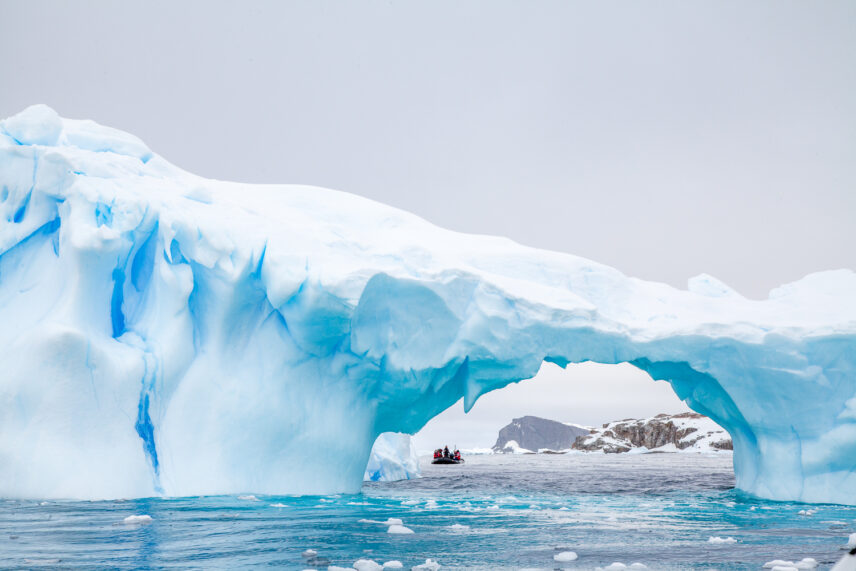
• Sculpted icebergs
• Humpback whales feeding on krill blooms
• The unexpected and the visceral quiet of fjords carved by millennia of ice
Falklands South Georgia & Antarctica (2026 & 2028)
One of the most powerful biological journeys on Earth. South Georgia is often called the “Serengeti of the Southern Ocean” — hundreds of thousands of king penguins, elephant seals, and albatrosses. It is staggering in scale! Emotional, biological, and historical.
You’ll Witness:
• Sub-Antarctic climate gradients
• Ocean circulation pathways
• Wildlife recovery after historic exploitation
• Some of the world’s most significant seabird colonies
Fly The Drake
A shorter journey with maximum time on the continent. This route bypasses the Drake Passage by flying into King George Island — perfect for women who want the science, the wildlife, and the wonder without the 2-day ocean crossing. This isn’t just a trip — it’s a collective learning space.
You’ll Experience:
• Deeper learning programs
• Women-led Zodiac excursions
• Storytelling circles
• Opportunities to engage with science happening onboard
• A strong focus on courage, collaboration, and community
Wild Women Expeditions is collaborating to bring more women leaders, naturalists, and field experts on board— a rare opportunity to learn directly from women shaping climate science, conservation, and expedition leadership today.

PS. I will be hosting the Svalbard Explorer on June 15, 2026! Do not miss this wonderful opportunity to explore way up north- in one of the bookends of our planet.
Learn more about all of Wild Women Expeditions’ Small ship journeys below.